Scheduled runs and tracker export: testing runs itself, findings reach your board
TaloTrace Team
A manual regression pass is the first thing dropped when a deadline gets close, which is exactly when you need it most. Testing that depends on somebody remembering is not testing you can count on. And a finding nobody sees is not much better than one nobody found.
So a run no longer has to be started by hand, and a confirmed finding no longer has to be copied out by hand. Set a schedule and TaloTrace tests your latest finalised build on its own. Opt a project in and approved findings land in the tracker your team already works from.
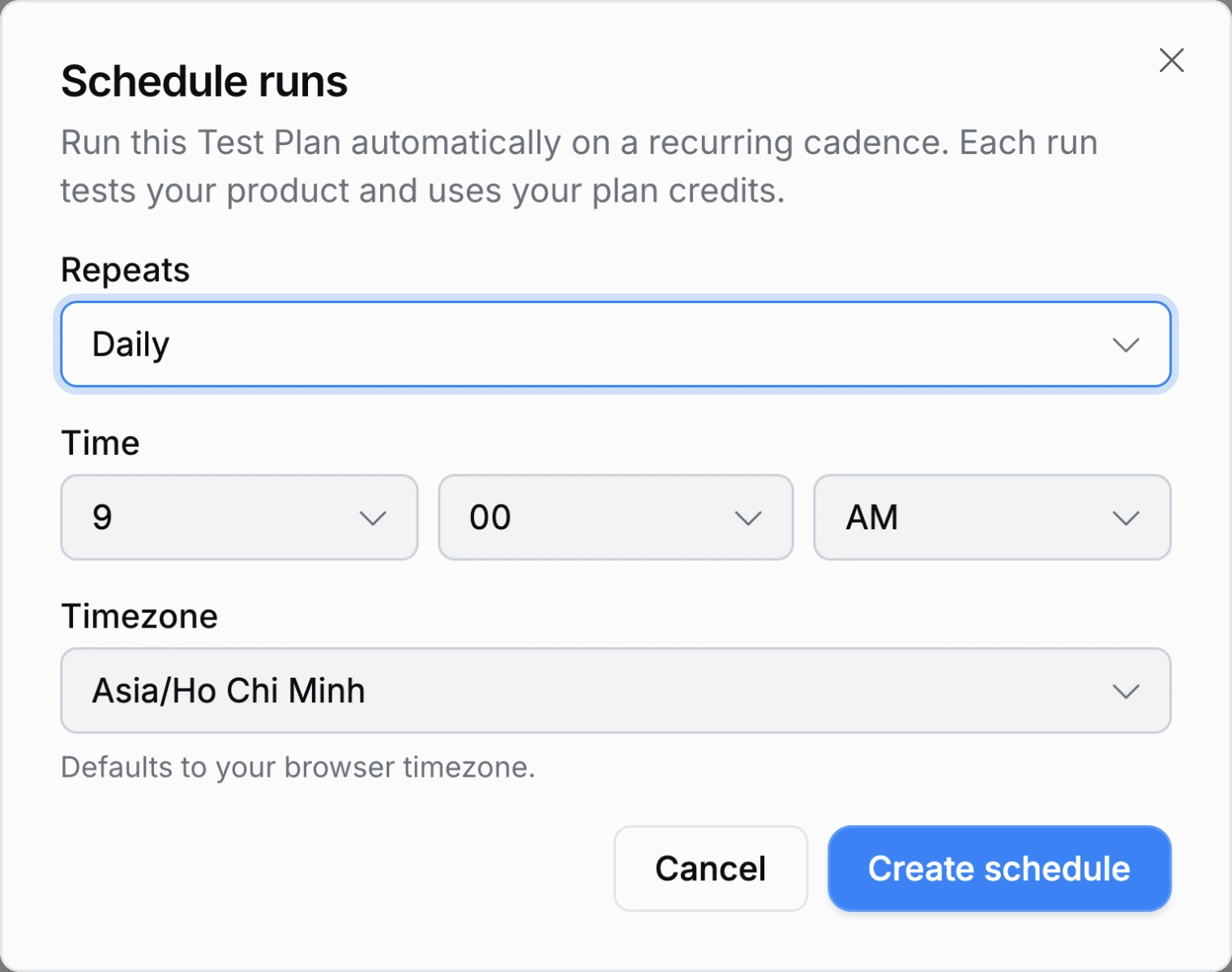
- Scheduled: daily or weekly, always against your latest finalised build, so you are testing what your team shipped this week rather than a build someone pinned a month ago.
- Overnight: pick the time and the findings are waiting when your team logs on, so a regression introduced on Tuesday is in your results on Wednesday morning.
- On demand: start a run from the app whenever you need an answer now.
- Export to Jira or Linear: push approved findings straight to your board. Export is off by default per project, so nothing reaches your team's backlog until you decide it should.
- Scheduled and on-demand runs draw on your plan identically, so turning a schedule on does not change what a run costs you.
Where to find it
Schedules are set per project, in your Test Plan settings. Tracker export sits under a project's integration settings.
How to use it
Open your Test Plan settings, choose daily or weekly, and pick the time. Every run from then on picks up your latest finalised build automatically. Opt a project into a tracker when you want approved findings pushed without anyone retyping them.
What changes for your team
Regression coverage stops being a task somebody owns and becomes something that has already happened by the time anyone asks. What it finds arrives where the work already happens, rather than in a tool someone has to remember to open.